Guides / 50 questions to ask your grandparents about their life
50 questions to ask your grandparents about their life
The stories your grandparents tell once and you wish you had kept. Here are fifty questions to draw them out, grouped so you can start anywhere.
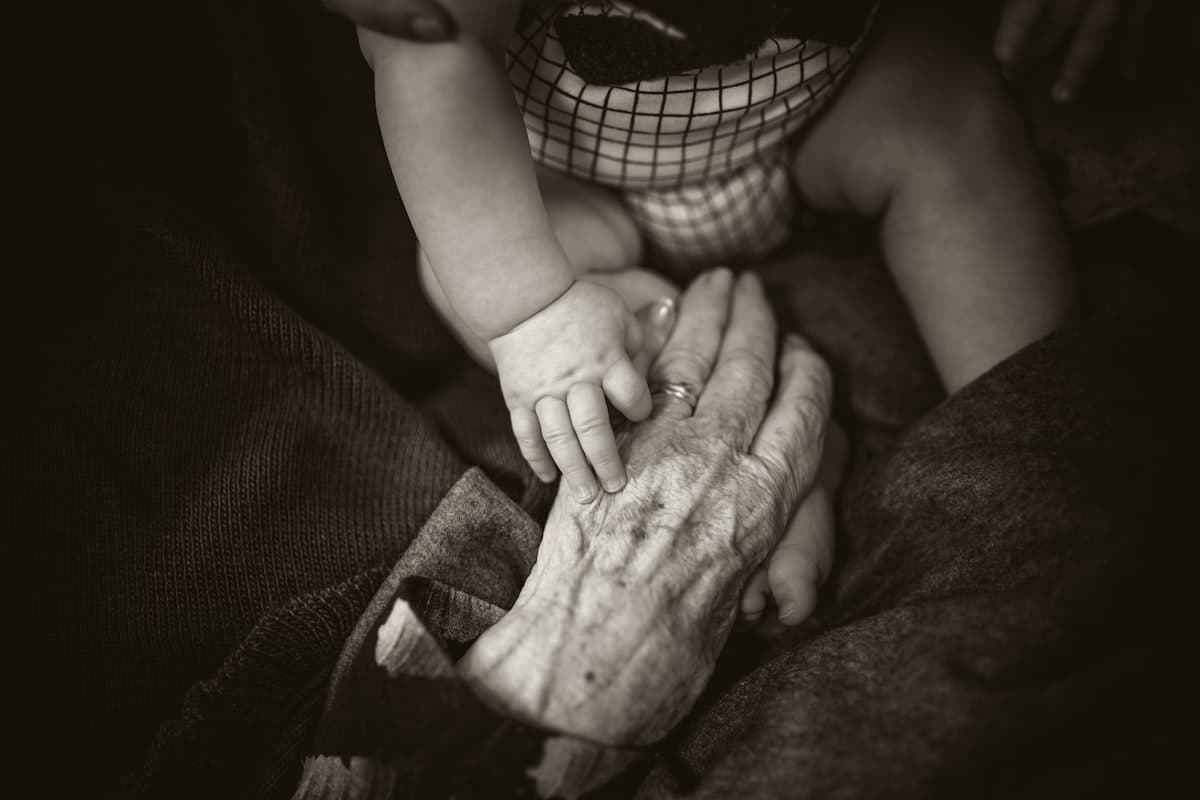
There is a particular kind of regret that arrives too late: the story you half remember your grandmother telling, the name of the village your grandfather left, the recipe nobody wrote down. The good news is that most grandparents love to be asked. They rarely are.
Below are fifty questions, grouped by theme so you can open anywhere and follow the conversation where it wants to go. You do not need all of them. Pick three or four, make a pot of tea, and let one answer lead to the next.
Questions by theme
Childhood and early years
- What is your earliest memory?
- What did a perfect Sunday look like when you were small?
- Who were you closest to growing up, and why?
- What games did you play in the street or the garden?
- What did your childhood home smell like?
- Were you ever in trouble as a child? What happened?
- What did you want to be when you grew up?
- What is a smell or a song that takes you straight back?
Take the questions with you
Enter your name and email and we will send you the printable keepsake: the ten most important questions in a beautiful format you can print and keep.
Family and where we come from
- Where did our family come from, as far back as you know?
- What were your own grandparents like?
- Is there a family story that gets told again and again?
- What did your parents do for a living?
- What traditions did your family keep that we have lost?
- Who in the family am I most like, do you think?
- What is something about our family you hope we never forget?
Love and marriage
- How did you meet Grandma, or Grandad?
- What do you remember about your first date?
- When did you know they were the one?
- What was your wedding day actually like?
- What is the secret to staying together, in your experience?
- Who was the first person you ever loved?
Work, purpose and the wider world
- What was your first job, and what did it pay?
- What work are you most proud of?
- Was there a moment that changed the direction of your life?
- What historic event do you remember most clearly?
- How is the world today different from the one you grew up in?
- What did you do that took real courage?
Everyday memories, the small ones that matter
- What was your favourite meal as a child, and who made it?
- What did a holiday look like when you were young?
- What was the first film or record you loved?
- What did you do for fun before television and phones?
- What is a possession you have kept for years, and why?
- What made you laugh most when you were young?
- Is there a friend you think about often?
Wisdom and reflection
- What are you most proud of in your life?
- What would you tell your twenty-year-old self?
- What has surprised you most about getting older?
- What does a good life mean to you now?
- Is there anything you wish you had done differently?
- What are you grateful for today?
- What do you hope we remember about you?
- What is the best advice you were ever given?
- When were you happiest?
- What still gives you hope?
- If you could relive one ordinary day, which would it be?
- What do you want your great-grandchildren to know about you?
- What is a lesson life taught you the hard way?
- What do you think happens to the stories we tell?
- Is there anything you have never told anyone that you would like remembered?
How to make the conversation easy
The questions matter less than the room you make for the answers. A few things help. Ask one question and then wait, the pause is where the real memory surfaces. Follow the feeling, not the list: if a question lights them up, stay there. And keep it, because the exact words, the laugh, the way they say a name, are the part you will treasure most, and the part memory loses first. If you would like to hear what a weekly call sounds like, our short demo plays a sample.
The stories your grandparents tell once, and you wish you had kept.
Related guides: if you are marking the occasion, see when Grandparents Day falls and our gifts for grandparents, and for a wider set of prompts try our life story prompts. If you would rather give the whole thing, HeartTold works beautifully as a gift.
Keeping the answers, not just asking the questions
Asking is the easy part. Keeping is where families struggle, the story half remembered, the notes nobody types up. This is the whole reason we built HeartTold. One of our friendly, patient agents calls your grandparent each week on a schedule that suits them, asks questions like the ones above, and keeps their answers in their own voice in one private family archive that grows every week. No app for them to learn, just a phone call. Everything is private and is never used to train AI models.
Keep their stories, in their own voice
HeartTold turns a weekly phone call into a living family memory vault: their voice, their memories, their photos, kept for the people who love them.
Common questions
What is the best question to ask a grandparent?
Start with an easy, happy one that invites a story rather than a yes or no answer, for example, "What did a perfect Sunday look like when you were a child?" Warm, specific questions open the door to the deeper ones.
How do I record my grandparents' answers?
The surest way is to capture the answers in their own voice, not leave them to memory or scribbled notes. HeartTold does this for you: one of our friendly, patient agents calls your grandparent each week, asks questions like these, and keeps every answer in their own voice in one private family archive the whole family can share.
How many questions should I ask in one sitting?
Three or four is plenty. The goal is an unhurried conversation, not an interview. A short call every week gathers far more, and far richer answers, than one long session.
Our Call Agents are trained AI models, and we have been using them with our own families. Friendly, patient, and private: your family's stories are never used to train other AI models.